I'll meet you there.
Beyond right-doing and wrong-doing there is a field. I’ll meet you there.
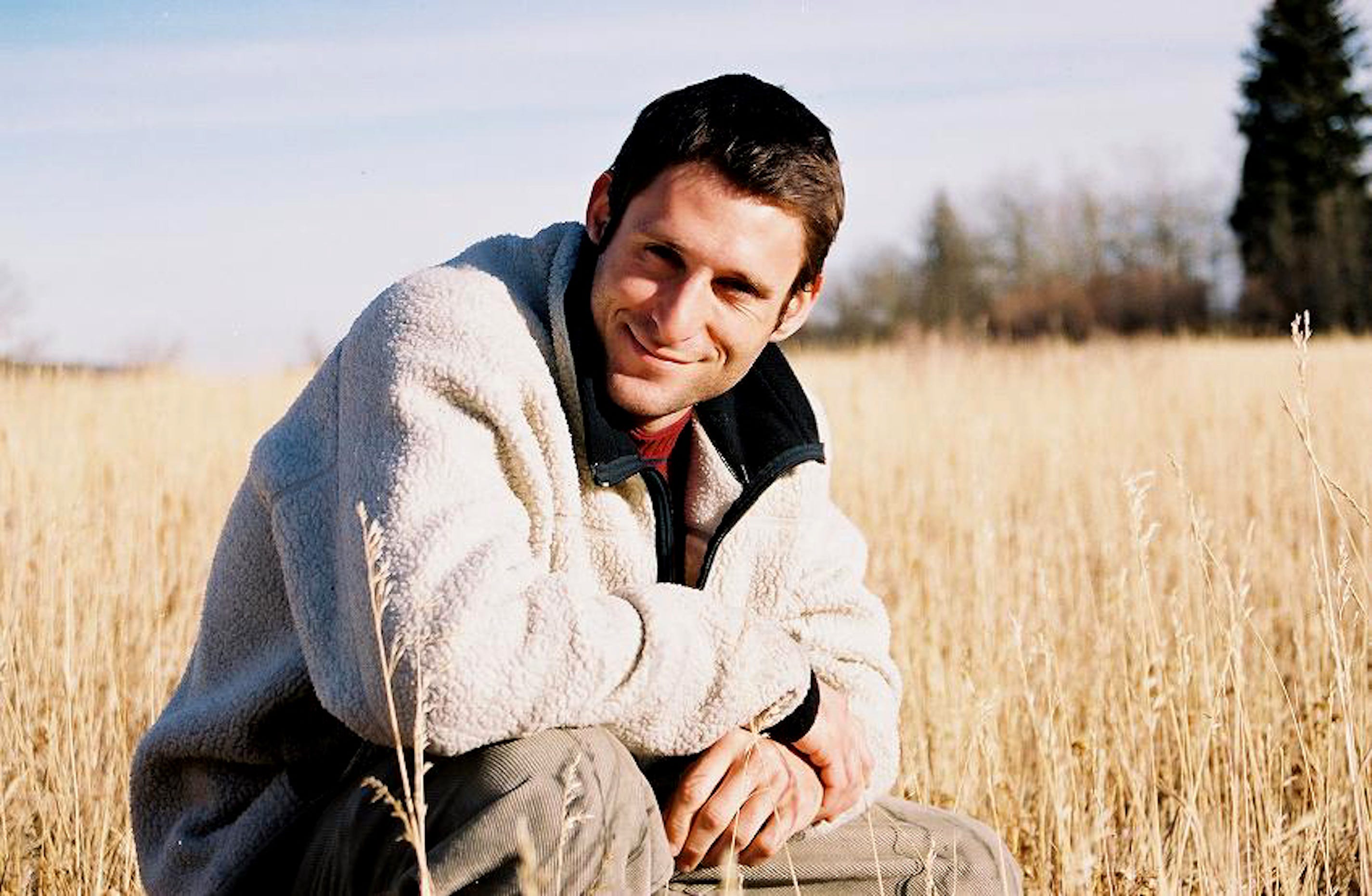
MEETING PLACE INTERVIEW WITH DAVID MILLER 34THPARALLEL MAGAZINE ISSUE 001
Stories lead me back home, wherever I am, David Miller says. “That’s why I write.” He studied creative writing in Coleman Barks’s class at the University of Georgia. Barks is known for translating the work of the Persian poet Rumi, a 13th-century Sufi master.
“It was a lucky experience not because I learned any writing techniques from Barks-at least not consciously-but simply because he was so cool to be around,” David says.
“He wasn’t as famous back then, but infamous. You’d see him out at the Manhattan and other bars, often with young beauties.”
After graduating David left home big time, took a long hike on the Appalachian Trail, then later, spent many years surfing through Mexico, Central and South America, and the US.
“I met other men like Barks: men who still had the curious and alert eyes of children,” David says. “They’ve always been my heroes, these men who make you feel like you’re brothers.”
One part of a quatrain by Rumi goes something like “Beyond right-doing and wrong-doing there is a field. I’ll meet you there.”
David says: “I love that. There’s just something about that idea that resonates with me. That there’s more to the universe than cause-and-effect, right or wrong, life or death.
“And I like the image of it being a real place, a field somewhere that you can go to and meet someone else there, whoever it might be. I believe in place.”
At some level, all writings and traditions seem to connect, David says.
“That line of Rumi’s wouldn’t seem out of place as a Zen koan, or maybe, if you added beer somewhere, part of a Bukowski poem.
“There’s definitely something in Rumi that speaks to me not only as a writer, but as just another struggling human.
“He seemed drunk on life. Death was something laughable. It reminds me of Chekhov on his death bed refusing medicine and asking for champagne.”
David lives with his wife in a one-bedroom apartment at Boulder, Colorado, near a dog park.
“Our dog Julio has mounted nearly every other dog in the park,” he says.
“He’s a mutt my wife rescued off the streets of Buenos Aires. He’d never been out of the city, off the pavement, and when we brought him back to the US, we drove across the country, got out in the Kansas prairie, and Julio ran so fast and so long through the grass we thought he might explode in flames.”
David’s day job is in the construction industry. “I work as a carpenter, building and remodeling houses,” he says. “Except that you come home exhausted, construction seems really good for the writing.
“You sweep out a room when you’re done working there, and something about it-starting in the corners, pushing all the debris towards the center, then scooping it up and tossing it in the can-teaches you about writing a story or a poem.”
David started his apprenticeship when he was 30. “I’m the strange guy at the jobsite who made a conscious decision to be a builder. I wanted to learn to build things and it’s just something you can’t learn from a book. I have an education, as they say, but building seems to be another part of my education.”
In the last three years David has begun to write seriously. “I define that as writing as much as you can and reading as much as you can every day,” he says.
Writing for local papers and magazines, David says, has killed any sense of thinking he was doing something sacred. “I’d simply work all day as a carpenter, rush home, pound either beer or coffee (depending on how I was feeling) in the shower, change clothes, then blaze over to the town meeting to take notes before going back home and writing my article, which was usually due the next morning.”
This kind of writing taught him to drop any ego, to excise any poetic language, and tell the story as honestly as he could, he says.
“Whenever I write poetry or fiction now, it still feels like that same rule applies-just trying to get the words down without any bullshit.”
//
MARTIN AND ANDREA BY DAVID MILLER
They took their coffee mugs to the front of the café. Andrea chose two seats looking out the southern window, then turned so she was facing Martin. Martin sat looking straight out the window. A couple of young hippies were out front. They had wrenches and were doing something to their bikes. One of them had a big sheath strapped to his belt but the knife was missing. What kind of person wore a sheath with no knife?
Andrea chewed her cookie. Peanut butter. They didn’t eat peanut butter back in her home country. When she’d met Martin, and asked about what he ate back home and he’d told her, peanut butter. “Everyone grows up eating it,” he’d said. Now it had become her favorite food.
Martin kept his eyes off her. She was mad. He couldn’t even remember why. Sometimes she just woke up that way. And she always looked ugly when she was mad. The lines came out in her forehead, around her eyes. Her neck looked flabby. He didn’t want to look at her. But he could feel her turned towards him, waiting for him to say something. Outside, one of the hippies pulled out a cigarette stub and put his lighter to it.
“Martín?” She put down her cookie on a piece of wax paper. “Mar-tín,” she said again, this time stretching out the second syllable.
He turned and looked at her neck. She was starting to get a second chin. He looked away. A third hippie had joined the other two. He’d seen him around town. He never seemed to work, but just ride his bike back and forth from the Co-op to the café. Martin had named him “the sheep.”
Andrea began talking, “You’re making me very sad. You know that I detest this life here, without independence, without friends, and still you make things harder. You don’t take care of me, and this hurts me. Each day is a torture. I am alone. You never invite me to a special dinner.”
Martin let the words filter in and out, his mind translating her words from Spanish to English. The words kept coming, the same ones she always used. She went on, “You never take off your dirty Carharts and put on something lindo. And look at your fingernails.”
Martin put his hands under the table. He did it half as a joke, but didn’t look to see if she picked up on it. He turned as a cyclist walked through the door. The cyclist had on a spandex jersey and bicycle shorts. His legs were shaved. Two other cyclists followed him in. Their biking shoes made clicking sounds on the wood floor.
“Would you mind if I use your phone for a local call?” one of them asked the barista. More polite, perfect citizens.
Andrea kept talking. Suddenly the alarm went off on Martin’s watch. He’d never figured out how to get it to shut off. He could only move the hour around from 9:34 a.m. to 10:34 a.m, to 11:34 a.m. etc. He hated wearing the thing, but it helped him get through the day. He’d stop to look at it while digging holes for footers or pulling nails out of lumber.
Finally Andrea stopped talking and just faced forward. But she wasn’t looking through the glass. She wasn’t looking at anything. Martin knew she was thinking about her mundo, as she called it. The world she’d left behind to follow him here. Now it had become her idealized world, a world where everything was easier. A world without George W Bush. A world without perfect, polite citizens, but real people, friends and family.
Martin looked at her, finally. She no longer looked ugly, just sad. “Listen,” he said, “I know it’s been hard. I know we never go out dancing like we used to. It’s just that I’m trying to save money. I miss everyone too.”
Andrea looked at him, then nodded.
“If it makes you feel better, I’ll get a manicure,” Martin joked, then glanced towards the cyclists, “I’ll even shave my legs.” Andrea smiled, then put her hand into his.
“Nene, we just need more time together,” she said. “Sometimes I feel like the only time you want to spend with me is when we’re having sex.”
Martin squeezed her hand, then let go. He reached up and slid the back of his fingers along her round face.
“That’s not true, nena,” he said. But even as he said it, he wondered if he wasn’t just saying it for himself.
Martin felt her anger subsiding then, replaced by something else. It seemed like from the very day they met he was pulling her up from some darkness she kept to herself. And somehow-he couldn’t exactly explain why-this pulling up was always accompanied by a sexual charge. Even then as he stroked her face, he felt his penis stiffening.
Andrea brought up her other hand and held Martin’s fingers against her cheek. He looked out at the three hippies. They seemed to have given up on the bikes. Their wrenches sparkled beside them in the grass.
“I’m just working too hard, nena,” he said. “We’re both just working too hard.”
//
WHY DO YOU ALWAYS LOOK IN THE MIRROR? BY DAVID MILLER
He’d forgotten that elevators always made her claustrophobic. All he saw was her eyes squinting. She was angry. There’d been a scene up in their room. She’d asked him if she looked good, and he said yes, but better if she put on the other shoes.
“What do you want me to look like, a puta?” she’d said. “This skirt is too short to wear with those shoes. I’m a woman, don’t you see? I’m 36. I can’t dress like that.”
But he didn’t want her to look like a puta. He just wished she’d dress a little sexy. She always dressed plain, always tried to hide her body.
The elevator doors opened, and as they walked through the hotel lobby, he caught her looking at herself in the mirror and scowling. They walked out the revolving door onto Avenida de Mayo. It was Saturday night, humid, hot. The streets were full of people, taxis, motorbikes. The restaurant was 25 blocks away and they started walking with the thought of taking a taxi if they got too sweaty.
All the other couples-holding hands, walking with arms around each other-seemed to possess a happiness that was eluding them. And the women looked good. So many beautiful women. So many young girls.
They passed beneath an advertisement for lingerie. The model was an android, it seemed, impossibly thin, impossibly large-breasted, impossibly feminine and somehow masculine as well. Bizarre. She wore high-heeled shoes.
“Listen, are you going to keep walking ahead of me?” she asked. He hadn’t noticed he was 5 steps ahead. He slowed down. They started walking again. He needed to break the silence, respond with something. He felt the words coming out and wanted to stop them but sometimes it was just easier to talk.
“Why do you always look at yourself in the mirror?” he said.
She stopped walking. “Oh, you did it again,” she started crying. “You did it again. All I wanted was to have a good night, and look at me, look at these eyes. You’re only happy making me cry.”
“It’s not true,” he said. “Shit.” He looked around and wondered what he was doing with her. There were millions of women, and he had to pick the fat, unhappy one. And yet, even as he was thinking this, he looked at her belly and knew that after she cried a while longer, she’d get hungry-they’d both get hungry, and eventually succumb to dinner together. They’d forgive each other and then fight again and learn nothing or maybe learn enough to pretend better for each other. At least for a while.
“It’s not true, baby,” he said. “I’m sorry I said that.”
And he was sorry. And as the hardness in her face finally softened, he realized that she was pretty. It was just the goddamned city with all these sweaty flowers and women trying to look like the robot-models that was fucking with his head.
Yes she was pretty, maybe not beautiful, but pretty enough for him to wonder how she’d seemed so ugly only moments ago.